
Publications
Beyond “Associate Membership”: Five Strategic Takeaways from the EU-Canada Summit
Aaron Gasch Burnett outlines five strategic takeaways from the Montreal EU-Canada Summit, examining critical minerals and energy, “associate membership,” support for Ukraine, Arctic connectivity, and technology and AI. As Prime Minister Mark Carney returns to Europe, the commentary assesses what the summit achieved and what remains to turn its ambitions into lasting cooperation.

Mark Carney’s Asia Summit Swing: What’s at Stake for ASEAN, APEC and Canada-China Relations
As Prime Minister Mark Carney sets out on a four-summit swing from Dublin to Manila, Phnom Penh and Shenzhen, Vina Nadjibulla looks at what Canada has gained in the Indo-Pacific over the past year and what it now risks. Relations with Beijing have stabilized, but she argues that steadier ties with China must not lead to new dependencies. In Southeast Asia, a Canada-ASEAN trade deal is within reach, but she says tariff cuts alone won’t be enough without deeper industrial and strategic partnerships.

Canada’s National Security Strategy: Expert Analysis
Experts weigh in on The Plan for a Stronger Canada, the country’s first national security strategy in over twenty years: what it gets right, what’s missing, and what comes next.








Canada’s National Security Strategy: Connecting Europe and Asia for Economic Security
Canada’s new National Security Strategy and the Canada–EU summit in Montreal show how Ottawa plans to turn strategic autonomy into real partnerships. Yet a bet on Europe alone won’t deliver the resilience Canada needs, writes Vina Nadjibulla. With Japan, South Korea, Australia and Taiwan central to critical minerals, semiconductors and defence production, she calls on the upcoming foreign policy strategy to connect Atlantic and Pacific partners instead of treating them as separate files.
Silos Are Dead: Why Risk Can No Longer Be Contained Like Before
Geopolitics, economics and security can no longer be managed in separate silos. In Silos Are Dead: Why Risk Can No Longer Be Contained as It Once Was, Jonathan Berkshire Miller argues that governments and businesses must treat fragmentation as a lasting operating condition. For Canada, that means connecting critical minerals policy, Arctic infrastructure, Indo-Pacific engagement and trade diversification—and building the capacity to understand risks across those relationships.
Heated Rivalry, Canadarm and an AI moose: How could Canada’s soft power contribute to its statecraft?

As Canada defines its foreign policy and rebuilds its hard power, Tom Codrington, CSS Senior Fellow, argues that its global reputation deserves strategic investment too. From cultural exports to scientific leadership, the article explores how Canada can turn its soft power into concrete gains for its security, prosperity and international influence.
Canada and Vietnam: A Strategic Partnership Built on Economic Complementarity
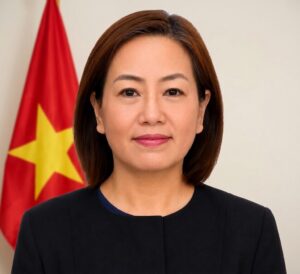
As Canada and Vietnam prepare to elevate their relationship to a strategic partnership, guest author Dr. Quynh Tran, Chief Trade Representative of Vietnam to Canada, argues that the most compelling reason isn’t about trading more with each other, but about building productive capacity together.
The Vietnamese president’s visit comes as Ottawa and Hanoi are both searching—from very different geopolitical positions—for greater resilience, diversified partnerships, and room to manoeuvre in a more contested world.
Why the Trump-Xi Washington Summit Matters to Canada
In Strasbourg, a muted Carney reins in EU enthusiasm and gives no answers
Prime Minister Mark Carney walked to the European Parliament’s lectern Thursday morning in Strasbourg, France, fresh off a clear political victory. But his vision of closer European Union ties has also clashed with harsh reality.