New data from the Angus Reid Institute in partnership with the Centre for Strategic Statecraft finds three-in-five Canadians would allow Chinese investment in Canadian electric vehicle and battery manufacturing. However, concerns about security and jobs remain.
Click to read the full report.
Prime Minister Mark Carney has opened the door to more investment from Chinese automakers as he meets with President Xi Jinping at the Asia-Pacific summit being held in Shenzhen, China.
New data from the non-profit Angus Reid Institute in partnership with the Centre for Strategic Statecraft finds three-in-five (59%) Canadians would allow Chinese investment in Canada in electric vehicle and battery manufacturing, but many (46%) would want some additional security or ownership restrictions. Fewer than three-in-ten (27%) say Canada should prevent investment in electric vehicle manufacturing entirely.
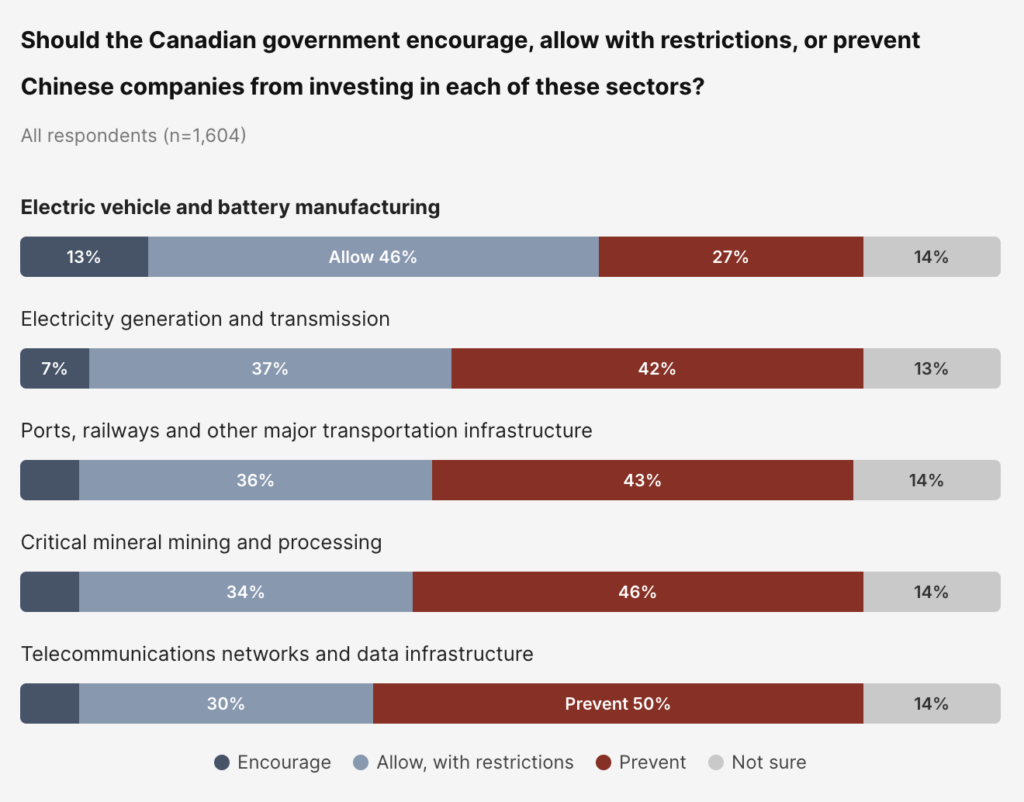
Electric vehicles are the sector where Canadians are most open to Chinese investment. In electricity generation, transportation infrastructure, critical minerals and telecommunications, the vast majority say additional security or ownership restrictions are needed, or that investment should not be allowed at all.
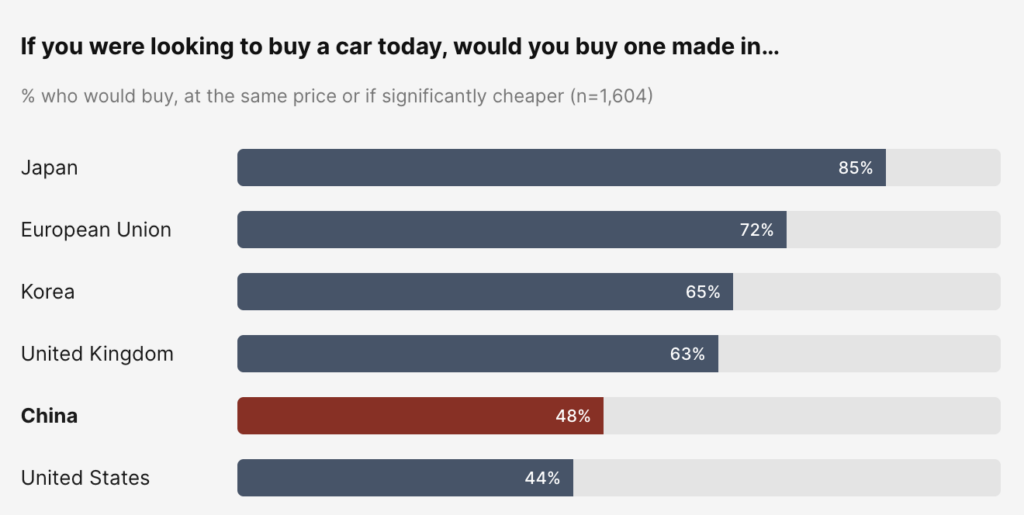
That openness is paired with some reluctance to buy. Half (52%) say they would not consider a car made in China if they were in the market for a new vehicle. However, that is similar to the proportion who wouldn’t consider an American one (56%), as U.S. President Donald Trump’s tariffs continue to punish the Canadian auto sector.
66% of those considering an EV for their next vehicle would buy one made in China, compared with 48% of Canadians overall.
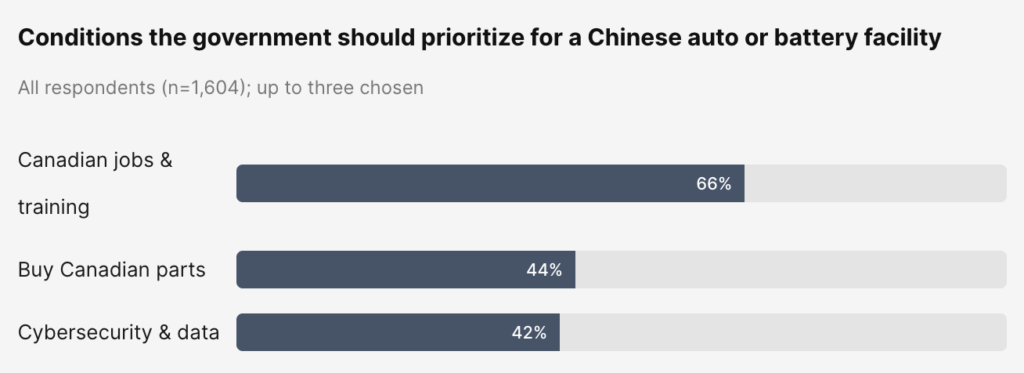
If Canada does allow Chinese automotive investment, Canadians say the government should prioritize Canadian jobs, commitments to purchase Canadian parts and protection of data generated in Canada.
Asked whether the federal government has the policies and tools to respond if future negotiations with China involve tariffs and other pressure tactics, confidence is slight.
49% have little or no confidence Canada has the tools to respond if China applied pressure. One-third (32%) are confident; one-in-five (20%) are unsure.
47% have little or no confidence Canada has the tools to respond if the U.S. applied pressure. Two-in-five (39%) are confident.